from Rosemary Gladstar's book "Medicinal Herbs, A Beginner's Guide"
Recognized as the oldest system of healing on the planet, herbal medicine traces its roots back to the earliest civilizations. Today, herbalism continues to flourish as a people's healing art. Even with the amazing technological advances of conventional (allopathic) medicine, herbalism - the art and science of healing with plants - is still widely popular. And its popularity is gaining, not waning. According to the World Health Organization, 80 percent of the world's population used some form of traditional medicine in 2008, and its rate of affordability, availability, and accessibility is surging.
So it's no wonder you're drawn to these healing plants and curious to learn more about them. But perhaps you're nervous about trying herbal home remedies. What are these herbs? Are they safe? Do they work? Can you grow them at home? Can you make your own remedies? When and how do you use them? How easy is it to get started? These are some of the questions we'll address here.
Botanical Boom
According to the"The Natural Pharmacy", by Schuyler Lininger et al., one out of every three adult Americans uses complementary/alternative medical care. Sales of botanicals have increased more than 300 percent since the 1990s and currently are an $8 billion industry.
Showing posts with label healing plants. Show all posts
Showing posts with label healing plants. Show all posts
Saturday, April 28, 2012

Thursday, April 5, 2012
Oregano Is A Healing Herb And Natural Antibiotic
Oregano is a healing herb and natural anti-biotic
by Dr. David Jockers
See all articles by this author
(NaturalNews) Oregano is a wonderful, aromatic herb that is native to the Mediterranean. It is thought to have originated in the mountainous regions of Greece, Turkey and Italy. It was named by the Ancient Greeks "Mountain Joy." Oregano is one of the most powerful healing herbs and natural anti-biotics ever studied.
Oregano has a warming and aromatic flavor to it. It can be very hot and bitter at times when it is picked fresh. The bite usually wanes as it is dried. Oregano became a staple of Italian-American foods. American soldiers who were stationed in Europe during World War II brought oregano back as the "pizza herb." It was soon used in more popularity in pastas, grilled/roasted veggies, meat & fish. It is also popularly used in meat marinates and salad dressings.
Oregano Oil is an extraordinarily powerful natural anti-biotic. Oregano has been found in a recent study to be significantly better than all of the 18 currently used anti-biotics in the treatment of MRSA staph infections. The strong phenol anti-oxidants destroy pathogenic bacteria, viruses and yeasts.
Incredible anti-oxidant capacity
This super herb is very rich in anti-oxidant phytochemical flavonoids and phenolic acids. It is the third highest herb in oxygen radical absorbancy capacity (ORAC) with an impressive score of 200,129. Oregano is one of the world's greatest sources of the powerful phenol component thymol. Thymol is great for improving digestive function as well as destroying harmful microbes.
The USDA ranks oregano's antioxidant capacity anywhere from 3 to 20 times higher than any other herb. Oregano has four times the antioxidant power of blueberries, 12 times that of oranges and 42 times greater than apples.
Oregano oil has been classically used as a disinfectant, an aid for ear, nose, & throat/respiratory infections, candida, and any sort of bacterial or viral conditions. Additionally, it works to suppress inflammatory mediators and cancer cell production. Oregano oil is more potent than the dried herb; however, the dried version still contains many powerful health benefits.
Studies have shown that carvacrol, a phenol anti-oxidant within oregano has powerful anti-inflammatory and anti-microbial activity when applied to food or taken in supplement form. Oregano also contains rosmarinic acid which has very strong cancer fighting properties.
Use dried oregano on vegetables, meat dishes and salads. Oregano oil can be used as an aromatic essential oil and/or as a medicinal. Simply put a dash behind your ear and a dash on your neck. Strong oregano oil may burn a little but will wear down in a few seconds. One could also ingest oregano oil - 1-5 small drops in a glass of water as it is particularly strong.
Oregano essential oil is available from my website at:
https://www.youngliving.org/laurasoils
Click on the Product Line link on the left and search for “Oregano”.
Sources for this article include:
http://www.naturalnews.com/034895_oregano_antioxidants_herbs.html
http://www.naturalnews.com/027333_oregano_parasites.html
http://en.wikipedia.org/wiki/Oregano
About the author:
Dr. David Jockers owns and operates Exodus Health Center in Kennesaw, Ga. He is a Maximized Living doctor. His expertise is in weight loss, customized nutrition & exercise, & structural corrective chiropractic care. For more information go to www.exodushc.com To find a Maximized Living doctor near you go to www.maximizedliving.com Dr. Jockers is also available for long distance phone consultations to help you beat disease and reach your health goals.
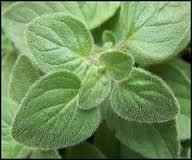
- Oregano Plant
See all articles by this author
(NaturalNews) Oregano is a wonderful, aromatic herb that is native to the Mediterranean. It is thought to have originated in the mountainous regions of Greece, Turkey and Italy. It was named by the Ancient Greeks "Mountain Joy." Oregano is one of the most powerful healing herbs and natural anti-biotics ever studied.
Oregano has a warming and aromatic flavor to it. It can be very hot and bitter at times when it is picked fresh. The bite usually wanes as it is dried. Oregano became a staple of Italian-American foods. American soldiers who were stationed in Europe during World War II brought oregano back as the "pizza herb." It was soon used in more popularity in pastas, grilled/roasted veggies, meat & fish. It is also popularly used in meat marinates and salad dressings.
Oregano Oil is an extraordinarily powerful natural anti-biotic. Oregano has been found in a recent study to be significantly better than all of the 18 currently used anti-biotics in the treatment of MRSA staph infections. The strong phenol anti-oxidants destroy pathogenic bacteria, viruses and yeasts.
Incredible anti-oxidant capacity
This super herb is very rich in anti-oxidant phytochemical flavonoids and phenolic acids. It is the third highest herb in oxygen radical absorbancy capacity (ORAC) with an impressive score of 200,129. Oregano is one of the world's greatest sources of the powerful phenol component thymol. Thymol is great for improving digestive function as well as destroying harmful microbes.
The USDA ranks oregano's antioxidant capacity anywhere from 3 to 20 times higher than any other herb. Oregano has four times the antioxidant power of blueberries, 12 times that of oranges and 42 times greater than apples.
Oregano oil has been classically used as a disinfectant, an aid for ear, nose, & throat/respiratory infections, candida, and any sort of bacterial or viral conditions. Additionally, it works to suppress inflammatory mediators and cancer cell production. Oregano oil is more potent than the dried herb; however, the dried version still contains many powerful health benefits.
Studies have shown that carvacrol, a phenol anti-oxidant within oregano has powerful anti-inflammatory and anti-microbial activity when applied to food or taken in supplement form. Oregano also contains rosmarinic acid which has very strong cancer fighting properties.
Use dried oregano on vegetables, meat dishes and salads. Oregano oil can be used as an aromatic essential oil and/or as a medicinal. Simply put a dash behind your ear and a dash on your neck. Strong oregano oil may burn a little but will wear down in a few seconds. One could also ingest oregano oil - 1-5 small drops in a glass of water as it is particularly strong.
Oregano essential oil is available from my website at:
https://www.youngliving.org/laurasoils
Click on the Product Line link on the left and search for “Oregano”.
Sources for this article include:
http://www.naturalnews.com/034895_oregano_antioxidants_herbs.html
http://www.naturalnews.com/027333_oregano_parasites.html
http://en.wikipedia.org/wiki/Oregano
About the author:
Dr. David Jockers owns and operates Exodus Health Center in Kennesaw, Ga. He is a Maximized Living doctor. His expertise is in weight loss, customized nutrition & exercise, & structural corrective chiropractic care. For more information go to www.exodushc.com To find a Maximized Living doctor near you go to www.maximizedliving.com Dr. Jockers is also available for long distance phone consultations to help you beat disease and reach your health goals.
Sunday, March 11, 2012
Effect of Microwaved Water on Basil Plants: The 20 Day Test
Ok, so I got an email from my cousin - you know, one of those viral emails that everyone forwards?
This email claimed that an elementary school student's science project tested the effect of microwaved water on a plant, with a second plant acting as control and given tap water. The photos in the email were pretty dramatic, showing the plant receiving the microwaved water as shriveled and dying. I checked Snopes.com (also known as Urban Legends) and they reported that it was False. Here's the link to the report on their website:
http://www.snopes.com/science/microwave/plants.asp
Well, emails went back and forth between me, my cousin, and several other recipients on the email list, debating if it were true. As a result of this flurry of emails, I took up the challenge to perform my own experiment.
I went to my favorite local plant nursery, well-known for the quality of its plants, and chose two basil plants that were as similar as possible (Why basil? Cause if they survive, I can always harvest them and add them to my spaghetti sauce, right?)
I brought them home and placed them both on my kitchen windowsill, side by side. They were in the same environment and received the same amount of sunshine. Here's the two plants the day I bought them - Day 0. Same height, same fullness, same healthy green color.
That first day, I filled a glass bowl with tap water and microwaved it for two minutes, until it was boiling, and let it cool to room temperature, then poured it into a pint-size canning jar and put a lid on it.
I filled the teakettle with tap water and heated it on the stove until it boiled, then also let it cool to room temperature, and poured it into a quart-size canning jar. I used different sized jars so I could easily tell them apart and ensure they wouldn't get mixed up.
Since the plants had been watered at the nursery the day I bought them, I waited until Day 2 to water them at home. Here's a photo of the plants on Day 2. They both still look the same.
I watered the plants every other day, and they continued to sit side by side on my kitchen windowsill. There wasn't any noticeable difference for several days, but then by Day 10, I could tell the plant getting the microwaved water was looking puny, while the plant getting the boiled tap water was thriving:
I felt so sorry for the poor thing, I decided to try to resuscitate it by giving it and the other plant both some rain water and a little direct sunshine out on the patio, since it was a nice warm day.
But when I emailed my cousin and told him I planned to rescue the plant, he encouraged me to continue the experiment and do a taste test after the plants grew bigger. So I continued to give the one plant the microwaved water, and the other plant the tap water boiled on the stove.
At Day 20, here is what they look like:
The poor little basil plant getting the microwaved water is nearly dead.
I don't know about you..... but I'm avoiding using the microwave from now on!
Do you think I should send this to Snopes and let them know that in this case, it's True that microwaved water will kill plants?
This email claimed that an elementary school student's science project tested the effect of microwaved water on a plant, with a second plant acting as control and given tap water. The photos in the email were pretty dramatic, showing the plant receiving the microwaved water as shriveled and dying. I checked Snopes.com (also known as Urban Legends) and they reported that it was False. Here's the link to the report on their website:
http://www.snopes.com/science/microwave/plants.asp
Well, emails went back and forth between me, my cousin, and several other recipients on the email list, debating if it were true. As a result of this flurry of emails, I took up the challenge to perform my own experiment.
I went to my favorite local plant nursery, well-known for the quality of its plants, and chose two basil plants that were as similar as possible (Why basil? Cause if they survive, I can always harvest them and add them to my spaghetti sauce, right?)
I brought them home and placed them both on my kitchen windowsill, side by side. They were in the same environment and received the same amount of sunshine. Here's the two plants the day I bought them - Day 0. Same height, same fullness, same healthy green color.
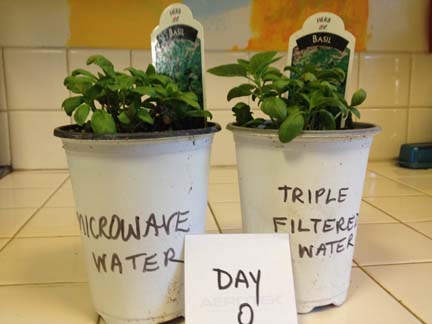 |
| Day 0 |
I filled the teakettle with tap water and heated it on the stove until it boiled, then also let it cool to room temperature, and poured it into a quart-size canning jar. I used different sized jars so I could easily tell them apart and ensure they wouldn't get mixed up.
Since the plants had been watered at the nursery the day I bought them, I waited until Day 2 to water them at home. Here's a photo of the plants on Day 2. They both still look the same.
 |
| Day 2 |
I watered the plants every other day, and they continued to sit side by side on my kitchen windowsill. There wasn't any noticeable difference for several days, but then by Day 10, I could tell the plant getting the microwaved water was looking puny, while the plant getting the boiled tap water was thriving:
 |
| Day 10 |
I felt so sorry for the poor thing, I decided to try to resuscitate it by giving it and the other plant both some rain water and a little direct sunshine out on the patio, since it was a nice warm day.
But when I emailed my cousin and told him I planned to rescue the plant, he encouraged me to continue the experiment and do a taste test after the plants grew bigger. So I continued to give the one plant the microwaved water, and the other plant the tap water boiled on the stove.
At Day 20, here is what they look like:
 |
| Day 20 |
The poor little basil plant getting the microwaved water is nearly dead.
I don't know about you..... but I'm avoiding using the microwave from now on!
Do you think I should send this to Snopes and let them know that in this case, it's True that microwaved water will kill plants?
Subscribe to:
Posts (Atom)